When you buy through links on our articles, Future and its syndication partners may earn a commission.

NASA's SPHEREx observatory has completed its first map of the entire sky over Earth, and it is incredible.
Beyond its aesthetic value, the map and the rest of the data collected by SPHEREx, which launched in March this year, will help astronomers answer some of the biggest cosmic questions. Among these are: what happened during the first billionth of a trillionth of a trillionth of a second after the Big Bang, and how this has influenced the 3D distribution of hundreds of millions of galaxies in our universe?
Scientists will also use SPHEREx data to investigate the evolution of galaxies over the 13.8 billion-year history of the cosmos. This could include determining how the key elements needed for life were disbursed.

"It's incredible how much information SPHEREx has collected in just six months — information that will be especially valuable when used alongside our other missions’ data to better understand our universe," Shawn Domagal-Goldman, director of the Astrophysics Division at NASA Headquarters in Washington, said in a statement. "We essentially have 102 new maps of the entire sky, each one in a different wavelength and containing unique information about the objects it sees.
"I think every astronomer is going to find something of value here, as NASA's missions enable the world to answer fundamental questions about how the universe got its start, and how it changed to eventually create a home for us in it."

SPHEREx, which stands for the "Spectro-Photometer for the History of the Universe, Epoch of Reionization, and Ices Explorer," orbits Earth just under 15 times per day from the North Pole to the South Pole.
As it does, this conical spacecraft captures 3,600 images throughout each of its orbits, with the orbit of Earth around the sun shifting the space observatory's field of view.
Beginning operations in May, it took SPHEREx until this month to complete its first map of the entire sky over our planet. During its primary mission lasting two years, the spacecraft is expected to complete another three all-sky scans. This data will be merged with the existing map to create an even more detailed picture of the sky over Earth.
"SPHEREx is a mid-sized astrophysics mission delivering big science," JPL Director Dave Gallagher said. "It's a phenomenal example of how we turn bold ideas into reality, and in doing so, unlock enormous potential for discovery."
LATEST POSTS
- 1
 Ukrainian foreign minister appeals for funds for drones
 - 2‘Dying of thirst’: Inside Gaza’s al-Mawasi water crisis
- 3Flu season is ramping up, and some experts are "pretty worried"
- 4This country music star spent years hiding his sexuality. Coming out — and beating addiction — has made his soul feel '20 pounds lighter.'
- 5German finance minister seeks better market access in China talks





- Figure out How to Explore Land Close to 5G Pinnacles
- After harsh winter, Ukrainians find joy in releasing bats rescued from war
- The most effective method to Recognize an Excellent Lab Precious stone
- ‘Slender Man’ attacker back in custody. What we know about Morgan Geyser's disappearance and what happens next.
- They died 'doing what they loved': The stories of workers in their 80s who died on the job
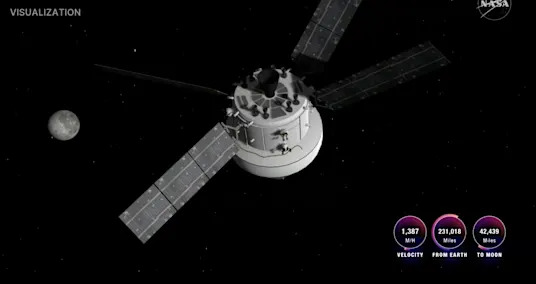
- Humanity is back at the moon! Artemis 2 astronauts arrive in lunar space
- 2024 Watch Gathering: The Best Watches of the Year
- Kremlin: Russian troops conquer Pokrovsk after year of intense combat
- AbbVie plans to build out its presence in obesity market